
Non-Dilutive Funding Webinar Series
Science Venture Studio - GE Extend Arkansas
Capitalizing on Non-Dilutive Funding and DoW Funding Playbook
Where federal funding stands today, what wins now, where AI helps and where it hurts, and how to build a funding strategy that lasts.
Recorded Wednesday, November 4, 2026Hosted with Science Venture Studio, Fayetteville, ARDownload Resources
Get the presentation slides and the full session recording.
What we covered
- 45 minutes
The session
Funding update and outlook, Write to Win + AI in Use, and long-term funding strategies.
- 15 minutes
Live Q&A
Questions answered by the Grant Engine team and Science Venture Studio.
- On demand
Watch anytime
Download the slides and watch the full recording, including the live Q&A.
Federal non-dilutive funding has changed more in the past year than in the prior decade. With the U.S. government's renewed focus on defense innovation, non-dilutive funding opportunities across the Department of War (DoW) are expanding in both size and velocity. This session delivers an actionable playbook for early-stage defense and dual-use tech companies to secure capital, validate technology, and transition into programs of record.
The session builds directly on intelligence from active engagements with DoW program managers, successful SBIR/STTR awardees, and transition champions. Whether your work touches AI, advanced manufacturing, precision agriculture, biotechnology, supply-chain innovation, or energy and environmental technologies, this is your moment to turn research into impact.
Funding Update and Outlook. Status, budgets, deadlines, and best fit across Life Sciences and Health (NIH SBIR/STTR, ARPA-H, BARDA) and Defense and Dual-Use (DoW SBIR/STTR, DARPA, DIU), plus the reauthorization provisions that matter most: the new Strategic Breakthrough Awards of up to $30M, proposal caps, expanded Direct-to-Phase II, and enhanced foreign risk and security requirements.
Write to Win + AI in Use. How DoW SBIR works, how DoW evaluates technologies, what reviewers look for, and how to align your technical approach, commercialization potential, and proposed work with DoW priorities. We also draw a clear line on AI: where it accelerates proposal development, where human expertise remains essential, and why even paid AI tools may not protect unpublished data and intellectual property.
Long-Term Funding Strategies. Moving from the next award to the next several years: diversifying across federal, state, non-profit, and global sources, and the plays leading companies use to build durable funding, including Snowball Effect, Collaborative + Strategic Partnerships, Always One Step Ahead, Platform, Free-Up Equity, and Virtuous Circle.
What you'll leave with
- Where the money is right now: status, budgets, deadlines, and best fit for NIH SBIR/STTR, ARPA-H, BARDA, DoW SBIR/STTR, DARPA, and DIU.
- What just changed: reauthorization provisions, annual proposal caps, Strategic Breakthrough Awards, and foreign risk requirements, and what each means for filing strategy.
- Why applications win or lose: the Approach section is the strongest single predictor of funding at NIH, and DoW ranks technical merit above all other criteria. Both are the hardest sections to write well.
- How to win more often: curb appeal, a self-evident story, logical flow, clarity through the Pyramid of Communication, shoring up the weakest criteria, and independent external review.
- The AI boundary: AI accelerates prior art and landscape research, digesting background material, benchmarking against funded work, and cutting to page limits. The grant thesis, differentiation, and Specific Aims remain human work.
- Protecting your IP: consumer AI terms may permit reuse of content, so patentable claims and unpublished results deserve an enterprise-grade, confidential tool.
- A long-term strategy: expanding and diversifying funding sources and compounding each win into the next.
Your speakers
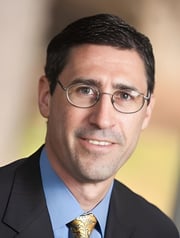
Sam Tetlow, MBA
Founder & CEO, Grant Engine
Sam leads Grant Engine, which has secured over $1B in non-dilutive funding for life sciences, defense, and dual-use companies through NIH, DoD, DARPA, BARDA, and ARPA-H, at win rates 2x to 4x the national average. He also leads Streamline, Grant Engine's AI-powered grant writing and management platform. He has served as CEO of EpiCypher, General Manager of ILS Genomics, and Executive Chairman of Gentris Corporation. Sam holds an MBA from UNC Kenan-Flagler Business School and a B.S. in Aerospace Engineering from Worcester Polytechnic Institute.
Q&A and Meet the Team

Humeyra Ulusoy, PhD
Program Manager, Grant Engine
Humeyra is a Subject Matter Expert and Program Manager at Grant Engine, where she helps clients secure non-dilutive funding. A seasoned chemical engineer and entrepreneur, she holds a PhD in Chemical Engineering and a BS in Bioengineering. Before joining Grant Engine, she secured NSF I-Corps, AFWERX, and USDA SBIR awards as a PI. She is co-founder and CTO of Hydralyze, which develops electrochemical and membrane-based water treatment technologies, and CEO of Smyrna Technical Solutions (Smyrna.ai). Humeyra also supports the local ecosystem as a technology mentor at Science Venture Studio/Winrock International and as an advisor and instructor at Empower Accelerator.
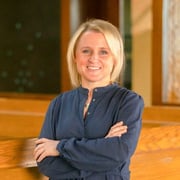
Katie Thompson
Executive Director, Science Venture Studio
Katie has over a decade of experience inside the Arkansas science and technology community. Launched in 2020 with support from the Walton Family Foundation, Science Venture Studio has helped Northwest Arkansas companies secure more than $17 million in non-dilutive federal funding. In 2021, she launched EMPOWER, which supports Arkansas founders applying for non-dilutive funding, and in 2023 she co-founded SURGE Arkansas to spur technology-based economic development. Katie was named to the Northwest Arkansas Business Journal's 2026 Forty Under 40 class.